
A foundational story for DOGGIT.
Our mom is the foundation for all of our inspiration at DOGG!T. We wanted to share this with you to give some insight on where our dog psychology training method started.
This is Buddy’s Story, a foundational story for DOGGIT.
Written in 2005 By Jo Simpson, Co-Founder of DOGGIT & Founder/Director of Canine Connections
Buddy, a recently rescued dog from death row, and a very large Chesapeake Bay Retriever, is settling in well at Canine Connections. He’s slowly but steadily improving with his separation anxiety. We’ve implemented a program where, each time we leave him, he receives a new or unfamiliar toy. Buddy is highly toy-motivated, and this has worked wonders keeping him busy, content, and even excited when we leave. Now, instead of stressing out, he eagerly waits to see what new toy he’ll get. He barely notices us walking out the door.
Buddy is truly a great dog, smart, sweet, and affectionate. But I’ll be honest: at first, he was a handful. Obnoxious behaviors like constant barking and destructive chewing had me questioning if I could keep him in the program. He even tore up one of our kennels. I can now understand why he was given up. He’s also dog-aggressive with some males, so I only let him out with my female dogs. Whoever fostered him before us must’ve been pulling their hair out, or his. Ha!
Buddy is currently in intensive behavioral reconditioning. He’s learning important indoor manners, and we’re addressing his issues with being alone outside. Overall, he’s making great progress, and we’ve grown quite fond of him. Buddy’s handler in our program is a 14-year-old, I’ll call him Matt for privacy. Matt is a gang member who was incarcerated for serious crimes, including some involving animals. For the first year he was here, he showed no empathy and barely spoke to adults. When he was finally moved out of maximum security, we saw an opportunity to try something different. The dog program felt like a long shot, but it was a shot worth taking. Matt didn’t want to join at first. He only agreed to participate to avoid being locked up again, and because his counselor encouraged him. Our hope was that the program might help him open up, learn empathy, and build trust with others.
Buddy was the last dog picked by a handler. Understandably so, he was overweight, filthy, slobbery, and not what you’d call conventionally attractive. Since Matt was the newest addition to the program, he was paired with Buddy by default. He was not happy about it. In his words, Buddy wasn’t “cool.” Together with the kids, we brainstormed ways to make Buddy more appealing: give him a bath, put him on a diet, work on his behavior, and study the Chesapeake breed standard and temperament. I pulled Matt aside and told him that Buddy had incredible potential, maybe more than any of the other ten dogs in the program. I knew this because I own three Chessies myself. He raised an eyebrow like he didn’t quite believe me.
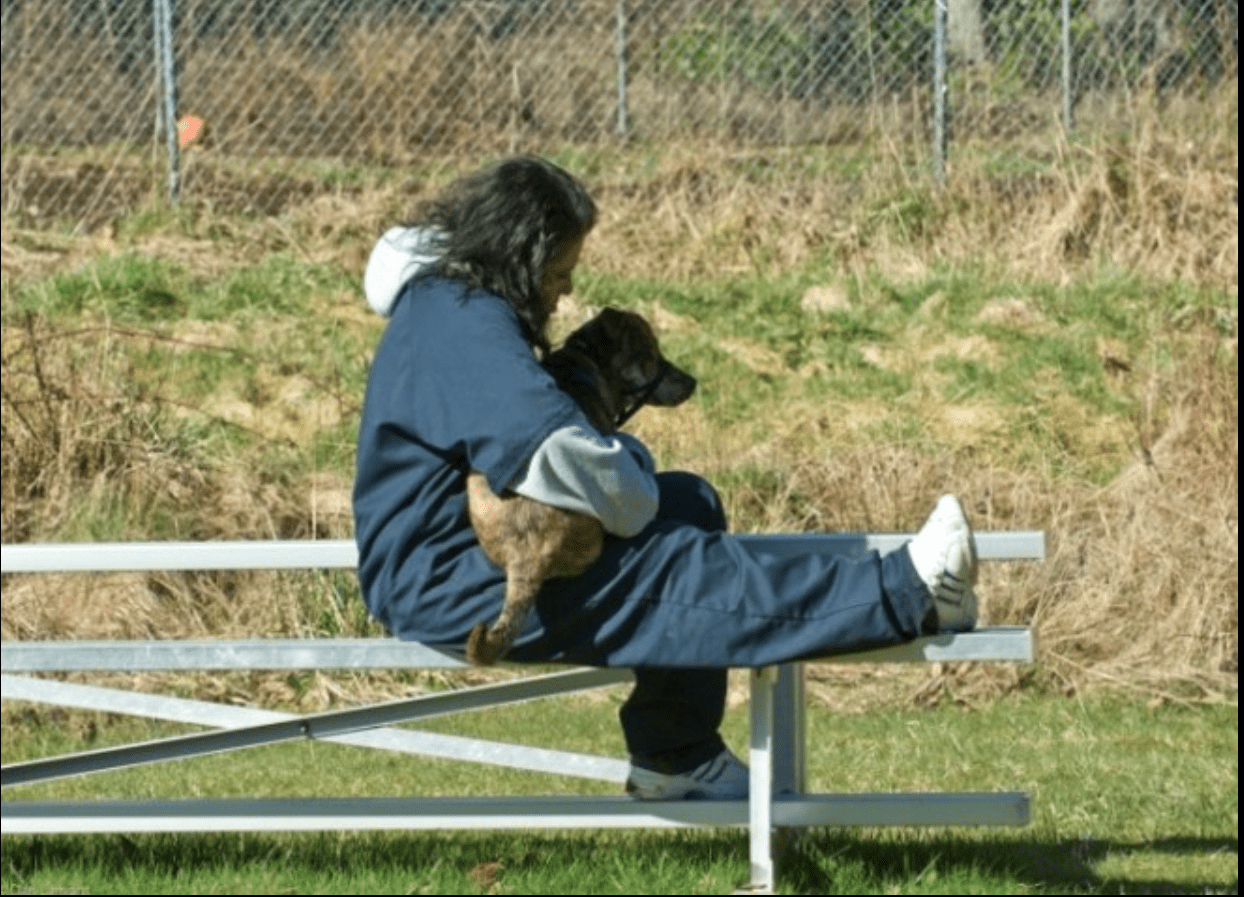
I also told him something else: “This dog will be more loyal than any of your gang homeboys. He’ll worship the ground you walk on and offer nothing but unconditional love.” That got the slightest smile out of him, probably thinking, “Lady, you’re crazy.” But just a few days later, Matt started getting involved in Buddy’s care and training. Slowly, he began to witness what I had told him, the loyalty, the bond, the complete devotion. Buddy knew exactly when Matt would arrive each day and would wait by the kennel door, tail thumping, eyes locked on the boy who had once dismissed him. No one else mattered.
Matt was floored that any living thing could be that happy to see him. And from that point on, the two became inseparable. The transformation was beautiful. There were kisses, sweet-talk, pride, and joy- all from a tough kid who had never shown his soft side. He went from being embarrassed to be assigned to Buddy to proudly telling everyone, “Buddy is the best dog in the class.” Working with Buddy gave Matt purpose. He started thinking up training plans for Buddy and in doing so, began reflecting on his own behavior and how he could change. Counselors noticed a real shift. Matt started opening up about his crimes and began expressing remorse and compassion, something he had never done before. He began to understand that his actions had caused real pain. And for the first time, he was dealing with that truth. And Buddy? He blossomed too. He lost 15 to 20 pounds, his eyes and ears cleared up, and he was groomed to perfection, bathed five times in three hours, with three full bags of coat brushed out. He was no longer anxious when left alone. Every idea we tried had worked. Buddy was now a confident, happy, well-mannered dog, and very much loved. At the end of the quarter, our canine handlers took the AKC Canine Good Citizen test and the basic obedience test. Matt and Buddy won the Best Dog and Handler award. Buddy was given a second chance through the Canine Connections program at Echo Glen Children’s Center, and through the bond and commitment Matt gave him. He was adopted into a forever home that December and is thriving. Matt was happy with where Buddy ended up. He’ll always carry those moments and lessons with him. On the day Buddy left, Matt gently placed him into the truck of his new family. Then he turned to me and said something I’ll never forget: “When I was first assigned to Buddy, I judged him by how he looked, not by what was inside. I’ve realized I’ve done that my whole life. If someone wore the ‘wrong’ color or wasn’t part of my gang, I’d want to fight them. I was fighting colors, not people. But people are just like me inside. I learned a lot from my dog.”
This story is a win-win, one I’ll never forget. Ahhh… the power and devotion of the DOG!
******************
For those who have never had the chance to meet our mom, Jo Simpson, this story represents just one of the hundreds of dogs and people she’s helped through her unwavering dedication to building strong human/dog bonds. Her lifelong commitment to understanding dog behavior, nurturing confident dogs, and inspiring others has shaped so much of who we are today.
For those who do know Jo, you can be assured that her legacy of devotion does not end with her. We are honored to carry her inspiration forward through DOGG!T’s behavioral psychology based training program and resources for responsible dog ownership.
Each month, we will be creating authentic, meaningful training resources based on her proprietary dog-psychology methods, designed to strengthen the bond between families and their dogs, build consistent structure, and support the development of confident, emotionally healthy dogs and homes. We will release one new training video, and 2 new blog resources each month.
For example, please check out a couple of our current blogs that focus on separation anxiety, and how to develop a confident, independent dog.
Our current videos focus on: Potty Training, Leash Walking, General Puppy Basics, and a favorite for all ages, The “Yes! Game”.
Our upcoming videos will feature: Crate Training, Jumping up, and Recall. We will also have some training videos to help with people who want to do performance sports with their dogs! Getting ready for CGC, Trick Dog, Rally and so much more!
Check out the videos yourself if you’d like ! The first month is $1, cancel anytime. Each month’s subscription is $10 to access all new and current videos and resource blogs.
Postscript About the Canine Connections Program:
Founded in 1999 by Jo Simpson, Canine Connections was created with a powerful mission: to give both incarcerated youth and rescue dogs a second chance. More than two decades later, the program continues to thrive under the leadership of Tina Reeves, touching lives and transforming futures through the healing bond between humans and dogs.
At its core, Canine Connections is an 8-week rehabilitation-based curriculum that mirrors the personal growth and therapy work the youth are engaged in themselves. Drawing from her studies under Marsha Linehan at the University of Washington, Simpson integrated the principles of Dialectical Behavior Therapy (DBT) with canine psychology to create a unique, therapeutic model she called Doggie Behavior Therapy. The foundation of the program is simple but profound: if a dog with a difficult past can learn, grow, and succeed, then so can the young person helping them.
But Canine Connections doesn’t stop at emotional healing. Simpson also built the program to equip participants with practical, career-building skills in the animal care industry. Youth gain hands-on experience in grooming, basic vet tech skills, kennel operations, doggie daycare management, and even service dog training, preparing some dogs for future roles supporting people with disabilities. These real-life skills open doors to employment and purpose after release, providing meaningful alternatives to the paths many of these kids were once on. Throughout the program, participants experience powerful and often first-time lessons: responsibility, patience, empathy, trust, and unconditional love. And at the end of each cycle, the youth work to place their dogs into carefully vetted adoptive homes, learning the courage it takes to let go, and the pride of knowing they helped give that dog a future.
Today, Canine Connections is a nationally recognized model of juvenile rehabilitation and animal rescue. It has been adopted by programs across the country, proving that change is possible when compassion, structure, and connection lead the way – one dog, and one young person at a time.